
Home | Areas of expertise | Processes | Finishing Processes
At HÖHN, precision doesn’t end with manufacturing. We ensure that your components remain functionally and visually perfect over the long term. With our finishing processes, we enhance the durability, corrosion resistance, wear resistance, and appearance of your precision parts.
Whether surface treatment, coating, or special post-processing, we offer a wide range of processes, individually tailored to the material, application, and customer requirements:
Our goal: Every component is finished to the highest standards in terms of both function and appearance, ensuring it reliably meets the demands of your industry.
Thanks to state-of-the-art equipment, in-house fixture manufacturing, and a team of experienced specialists, we can fulfill even the most complex customer requests.
Finishing is often an integral part of complete solutions within the scope of our assembly services.
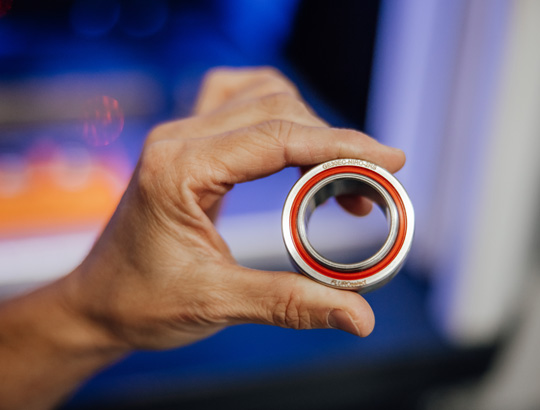
Depending on the process, a variety of materials can be marked—including stainless steel, aluminum, steel, plastics, and coated surfaces.
Marking lasers enable custom markings such as logos, serial numbers, barcodes, QR codes, scales, technical markings, and much more.
With modern laser marking processes, micro-markings are possible starting at a font size of approximately 1 mm. However, due to the very fine detail, these are only partially legible to the naked eye. In practice, markings are typically produced up to a size of approximately 1.5 mm.